


Laboratory Diagnosis of Dengue- Tests & Detection Guide
Dengue symptoms, including fever, headache, muscle pain and fatigue, can resemble other infections such as malaria and chikungunya. Therefore, clinical symptoms alone may not confirm dengue.
Laboratory diagnosis of dengue helps identify infections through specific blood tests, supporting early medical evaluation and appropriate patient management. Confirmed cases also help healthcare facilities monitor infection trends and identify possible outbreaks.
Organisations such as the Indian Council of Medical Research (ICMR), National Centre for Vector Borne Diseases Control (NCVBDC) and World Health Organization (WHO) support laboratory surveillance and public health responses.
What Are the Different Laboratory Tests Used to Diagnose Dengue?
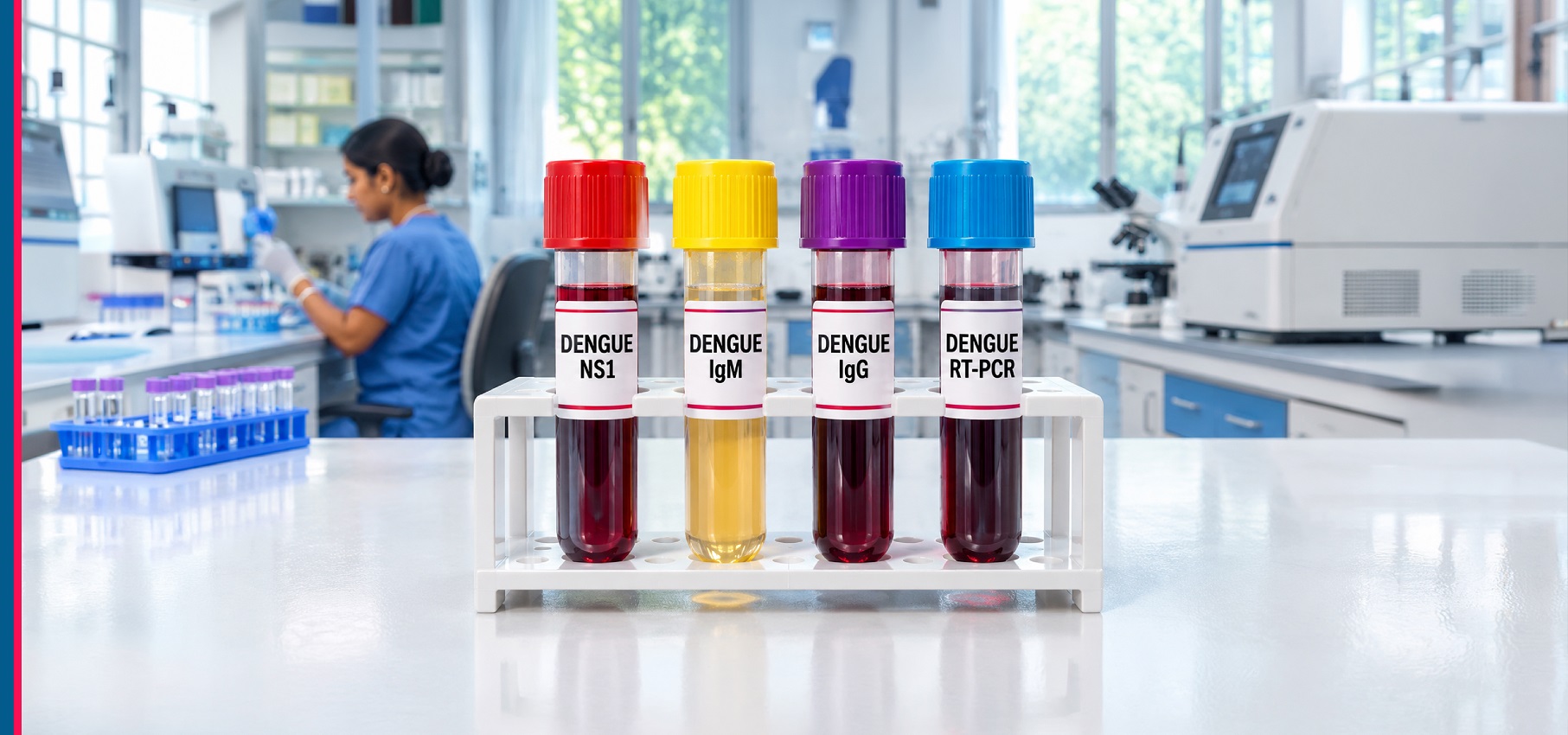
Several dengue diagnostic tests help identify the virus or detect the body’s immune response. The choice depends on the stage of infection and clinical assessment.
NS1 Antigen Test for Early Dengue Detection
The NS1 antigen test detects a protein released by the dengue virus during the early stages of infection. It is particularly useful during the first seven days of illness.
A positive result supports early dengue diagnosis. However, a negative result does not completely rule out infection, particularly in certain secondary infections. Further testing may be recommended if symptoms persist.
IgM, IgG and RT-PCR Tests for Dengue
- IgM antibody test: Detects antibodies that usually become measurable around day five of illness, indicating a recent immune response.
- IgG antibody test: Helps identify previous or evolving dengue exposure. Interpretation requires consideration of earlier infections.
- RT-PCR test: Detects dengue viral RNA and helps confirm active infection, particularly during the early illness phase.
These tests measure different aspects of infection and should be interpreted alongside symptoms and illness duration.
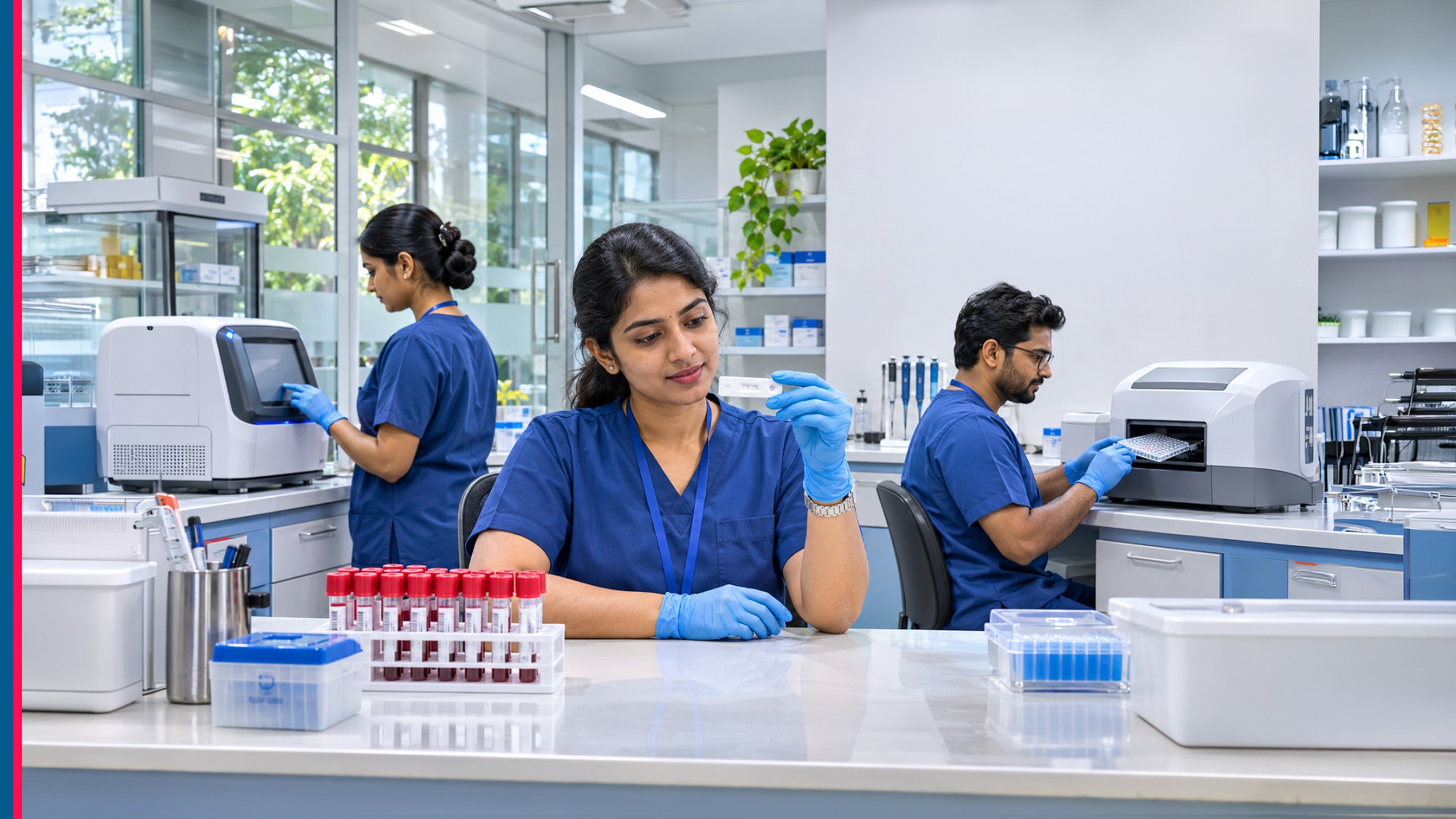
Several dengue diagnostic tests help identify the virus or detect the body’s immune response.
When Should You Get a Dengue Blood Test? Understanding the Right Testing Timeline
Testing at the appropriate time improves the chances of detecting dengue accurately.
During the first seven days of illness, NS1 antigen and RT-PCR tests are commonly used to identify viral components. IgM antibodies generally become more useful as the immune response develops, particularly after day five.
After seven days, antibody testing becomes increasingly important. If initial results are inconclusive but dengue remains suspected, doctors may recommend repeat testing.
The testing timeline should always be determined by the treating doctor.
How Do Laboratory Tests Help Monitor Dengue Severity During an Outbreak?
Laboratory investigations help doctors monitor changes in blood parameters and assess potential complications.
A Complete Blood Count (CBC) evaluates platelet count, white blood cells and haemoglobin-related parameters. Platelet levels may decrease during dengue infection, but low platelets alone do not establish disease severity.
Haematocrit monitoring is particularly important because rising levels may indicate plasma leakage. Doctors interpret these results alongside blood pressure, hydration, urine output and warning signs.
Serial blood investigations help guide clinical decisions and determine whether closer observation or hospital care is necessary.
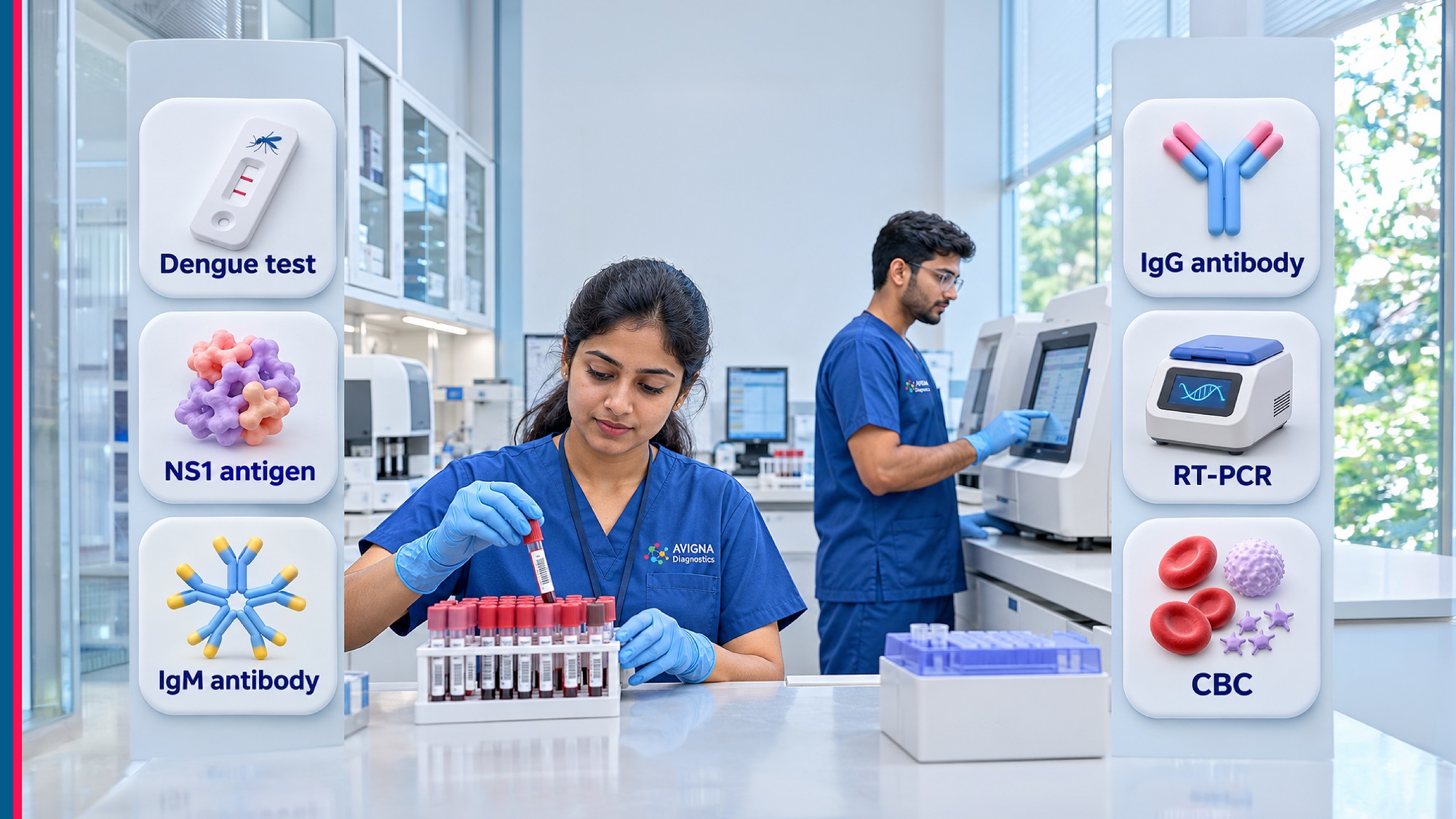
Laboratory investigations help doctors monitor changes in blood parameters and assess potential complications.
What Is the Cost of Dengue Diagnostic Tests in India?
The cost of dengue diagnostic tests in India varies depending on the type of investigation, diagnostic laboratory, location and testing facilities. NS1 antigen, IgM and IgG antibody tests, RT-PCR and Complete Blood Count (CBC) may have different pricing structures. Laboratories may also charge separately for blood sample collection, home collection services and additional investigations. Facilities with NABL accreditation follow recognised quality and testing standards.
Patients should consult their doctors before selecting a dengue blood test based solely on price. The appropriate investigation depends on the duration of fever, symptoms and clinical assessment.
| Dengue test | Primary purpose |
| NS1 antigen | Detects dengue viral antigen |
| IgM antibody | Detects an immune response to recent infection |
| IgG antibody | Helps assess previous or evolving immune response |
| RT-PCR | Detects dengue viral RNA |
| CBC | Evaluates blood parameters, including platelets and haematocrit |
Note: Test selection and interpretation depend on the illness timeline and clinical assessment. This table is not a substitute for medical advice.
FAQ
Q1. Which laboratory test is best for diagnosing dengue?
NS1 antigen and RT-PCR are useful during early infection, while IgM testing becomes more informative later. Doctors select tests according to illness duration and clinical findings.
Q2. When should I get an NS1 antigen test for dengue?
NS1 antigen testing is generally recommended during the first seven days of fever. Doctors may combine it with other investigations depending on symptoms and clinical suspicion.
Q3. Can a CBC blood test confirm dengue fever?
No. A CBC cannot independently confirm dengue. It helps monitor platelet counts, white blood cells and haematocrit, supporting doctors in assessing patients and identifying possible complications.
Q4. What Is the Cost of a Dengue Test in India?
Dengue test prices vary by laboratory and testing method. NS1, IgM, IgG and RT-PCR tests have different charges. Check current rates before booking.
Q5. Where Can I Get a Dengue Blood Test in Hyderabad?
Dengue blood tests are available at diagnostic laboratories and hospitals in Hyderabad. Consult your doctor about suitable tests and choose a quality-controlled laboratory.
Conclusion:
Laboratory diagnosis of dengue plays an important role in early infection detection, patient monitoring and outbreak management. Timely testing, accurate reporting and clinical assessment help healthcare providers make informed decisions and strengthen public health surveillance.
Related Keywords:
Dengue Blood Test, Dengue Diagnosis, Dengue Diagnostic Tests, Dengue Fever Diagnosis, Dengue NS1 Antigen Test, Dengue Testing, Dengue Virus Detection, Laboratory Diagnosis, Laboratory Tests for Dengue





Comments by admin